【How long does it take to gain 1kg of fat?】
May 08,2024
【How long does it take to gain 1kg of fat?】
1. Is it easy to gain 1kg of fat?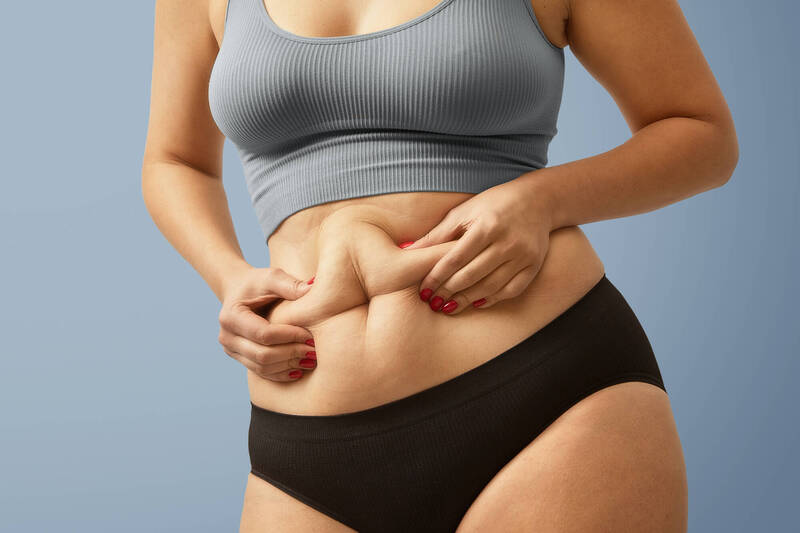
Gaining 1kg of weight doesn't necessarily mean gaining 1kg of pure fat.
For instance, after a large meal, if your weight increases by 1kg the next day,
you might wonder how you could have gained 1kg of weight so quickly.
In reality, the 1kg gained in the short term doesn't consist solely of 1kg of fat.
Losing body fat isn't as easy as it's often perceived, but neither is gaining it.
2. Conditions for gaining 1kg of fat
Gaining 1kg of fat requires consuming an excess of 7700 calories.
So, to gain 1kg of fat, you'd need to consume 7700 extra calories on top of your daily metabolic needs.
For example: If your total daily energy expenditure is 1800 calories (basal metabolic rate + activity level),
you'd need to consume 1800 + 7700 = 9500 calories to potentially gain 1kg of fat.
And 9500 calories of food would be equivalent to:
Eating 2 pounds of rice = 1160 calories
With 1 pound of braised pork = 2500 calories
Plus 5 chicken burgers = 2800 calories
Followed by dessert: 1 pound of cream cake = 2000 calories,
2 liters of cola = 900 calories, and an ice cream cone
*The total weight of these foods would be several kilograms,
far exceeding a mere 1kg gain in body weight.
Now, think about whether you could consume such a high-calorie meal in one sitting.
3. What happens when you truly gain 1kg of fat
It's not feasible to consume an excess of 7700 calories in a single day, but it's quite possible over 3-4 days!
If you consistently exceed your calorie intake for several days and reach a total excess of 7700 calories,
In addition to gaining 1kg of fat, your weight may also increase by 1-2kg in total!
*These are approximate values; individual body compositions may vary.
Because the increased weight includes many factors, such as undigested food residue, retained water, glycogen, fat, etc.
If you've gained 2-3kg of weight consistently, then it's time to take it seriously and start losing fat.
4. The truth about short-term weight fluctuations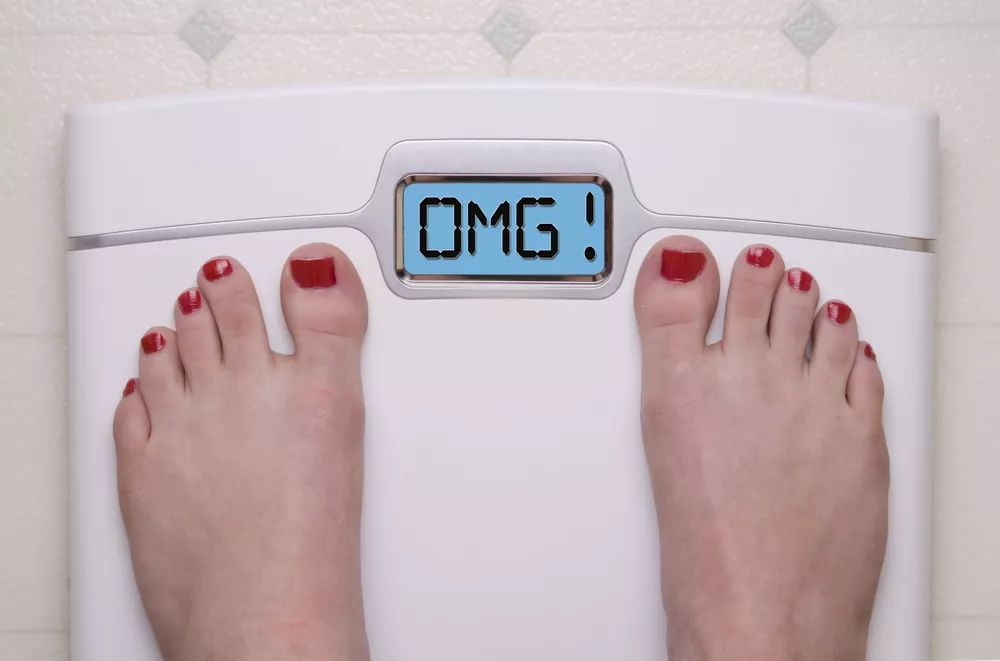
Both gaining and losing 1kg of fat are not matters of a day or two; they require long-term efforts.
Most short-term weight fluctuations are mostly due to water retention in the body!
If you've only indulged in a large meal outside at night
and wake up the next day with a 1 kg weight gain,
then most of this 1 kg weight gain is due to food residue and retained water.
There's no need to worry excessively or be anxious about this; you can easily lose this short-term weight gain the next day.
5. How to remedy
The next day should focus on reducing water retention and depleting glycogen!
Specific methods: Practice a "16+8" light fasting and exercise the next day!
*Recently, it has been proven that "16+8" is harmful to the body, provided it is done long term.
Suppose you indulged in a meal at 10 p.m. last night:
From 10 p.m. last night to 2 p.m. the next day, fast for 16 hours
Eat normally from 2 p.m. to 10 p.m. within this 8-hour window.
- Have a light diet (avoid exceeding calorie intake)
- Reduce carbohydrate intake for the day (deplete excess glycogen)
- Drink plenty of water; during fasting, drink pure water (promote metabolism)
- Engage in exercise: cardio on an empty stomach, gym, outdoor activities (eliminate water retention)
Comment

.png?w=1080&h=1080)